Today, the Aquaculture Accountability Project (AAP) and Farm Forward are releasing a new report that takes a hard look at the global aquaculture industry and the myths that have allowed it to expand unchecked. The Myth of “Sustainable” Aquaculture examines how claims of sustainability, responsibility, and ocean protection have been used to legitimize the rapid growth of industrial fish and shrimp farming—despite mounting evidence of harm to ecosystems, animals, and public health. Farm Forward has partnered with AAP because of their long-standing work exposing humanewashing and greenwashing across food systems. Together, we aim to challenge the narratives that have normalized industrial fish farming and open space for more honest conversations about reducing animal-based seafood and shifting toward plant-forward food systems.
What are the Myths of “Sustainable” Aquaculture?
Myth #1: Fish Farming Reduces Pressure on Wild Fisheries
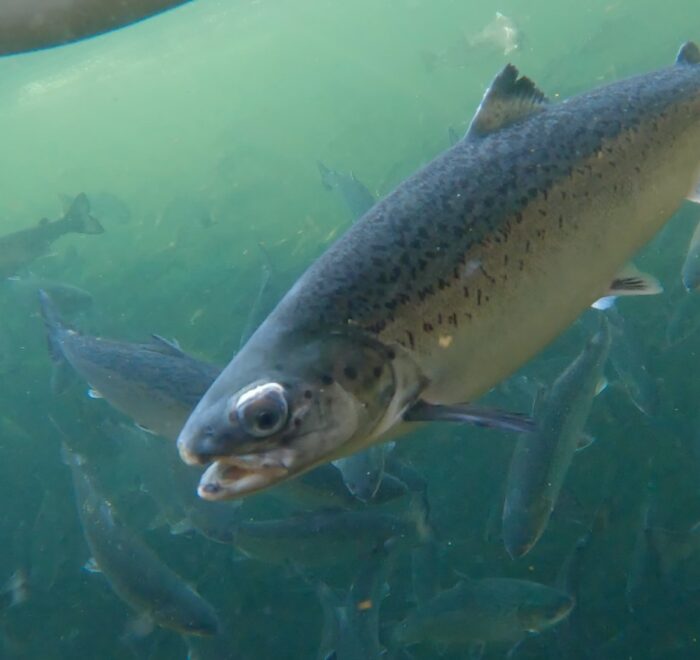
Fish farming emerged as a “solution” to the crisis of the depletion of wild fish populations, promising to reduce pressure on fragile wild fisheries. In reality, industrial aquaculture puts more pressure on wild fisheries, further depleting wild fish populations in ways that continue to imperil our oceans. With fish farming comes a high demand for small wild fish species (like anchovies and sardines) caught for farmed fish feed. Carnivorous species like salmon require large amounts of these feed fish, with recent research revealing that they may consume nearly six times their weight in wild fish before harvest.
Myth #2: Fish Farming Meets a Growing Demand for Seafood
Aquaculture has proliferated as a solution to growing demand for sea animals, when in reality, the industry has worked across scientific, policy, and cultural arenas to manufacture that demand. Fish farms now supply more than half of all aquatic animal products consumed worldwide. This rapid growth, rather than responding to demand, is driving higher levels of consumption of both wild-caught fish and farmed fish, deepening the crisis of the depletion of wild fish populations and ocean health.
Myth #3: Farmed Fish Is a Healthy Ocean Protein
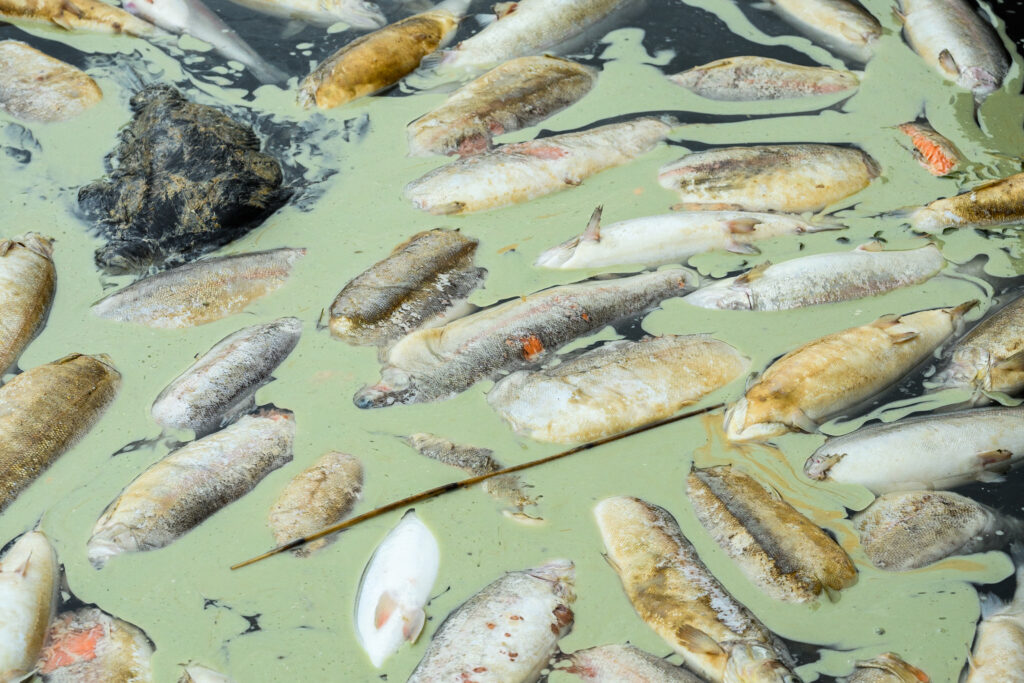
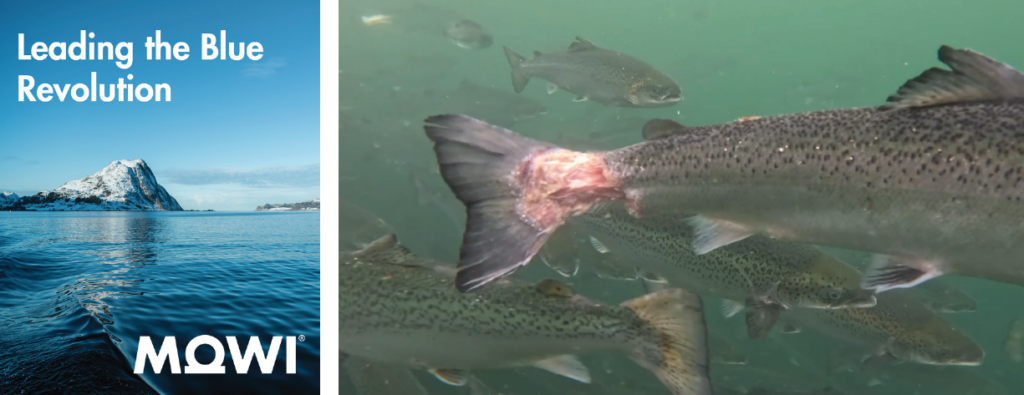
Fish farms are disease-ridden spaces where massive amounts of antibiotics are administered to keep fish alive. Even with the high rates of drug use in the industry, mortality remains high as fish continue to die from disease and spread these diseases to wild populations. The overuse and misuse of antibiotics in industrial agriculture is a leading cause of global antibiotic resistance, and the aquaculture industry is no exception. Aquaculture poses a risk to human health, not only in compromising the efficacy of antibiotics for the treatment of human disease, but also in the health risks associated with consuming these fish.
Myth #4: Farmed Fish Is a Climate-Smart Food
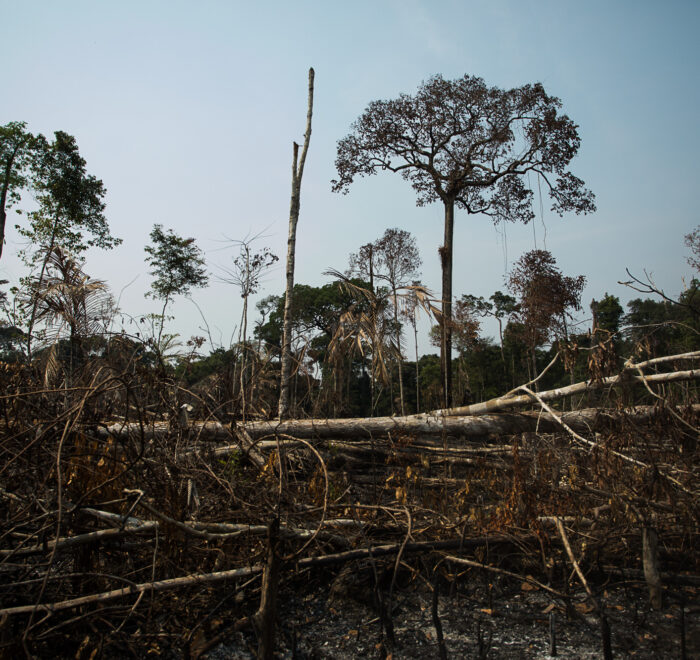
Fish farming, in reality, exacerbates climate change. Feed production, energy use, and high mortality make aquaculture highly carbon-intensive, with emissions often exceeding poultry and pork, and many times higher than plant-based proteins such as peas or soy. Worse, the industry also undermines natural carbon sinks by depleting forage fish who drive ocean carbon storage and by clearing mangroves for shrimp ponds, turning key carbon reservoirs into emissions sources.
Myth #5: Certifications and Labels Ensure Sustainability
Consumers concerned with the sustainability of fish and crustaceans often rely on labels and certifications to ensure that what they’re buying meets sustainability metrics. As in the case of animal welfare labeling in land-based agriculture, certifications rarely reflect meaningful guarantees of responsible production and are, instead, primarily used as marketing tools to deceive conscientious consumers.
Together, We Can Make a Difference
As the aquaculture industry continues to grow, it has never been more important to include this sector in climate and meat reduction work. We are proud to be working with Farm Forward on finding solutions to the problem of industrial aquaculture, from helping to empower consumers to make truly sustainable food choices to working with institutions to change their food purchasing practices. We hope that you will join us in this work. In addition to following AAP’s work on this issue, you can also sign up for the Farm Forward newsletter to get involved.