In October, the Aquaculture Accountability Project (AAP) joined faculty, researchers, and sustainability leaders from across the country at the National Sustainability Society’s annual conference at the University of Notre Dame. The event featured a fully vegetarian menu, reflecting a growing attentiveness to climate-aligned dining. Yet as campuses dive deeper into the food-system impacts of their sustainability commitments, many still turn to seafood as a solution—often unaware of the disparities between industry claims and science. The conference offered a timely opportunity to bring AAP’s research into this broader conversation and highlight why rethinking seafood is essential to building truly sustainable dining systems.
Unpacking “Sustainable” Seafood Claims
My talk, Rethinking Aquaculture in Sustainable Food Systems, was part of a panel on supply-chain sustainability. I shared the journey that led me to this work: years of hearing, as a freediver, that fish farming was the answer to overfishing—and then digging into the research and discovering a very different picture than the one promoted in mainstream sustainability circles.
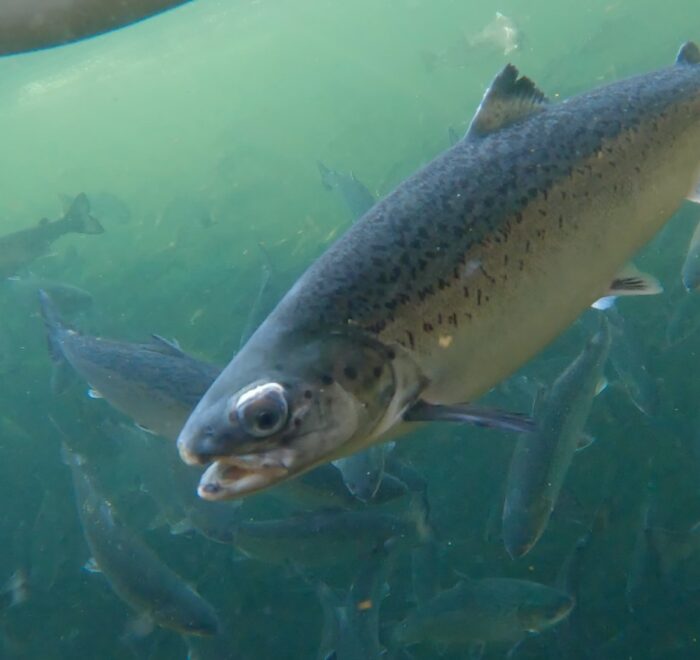
From there, I outlined the major myths driving fish aquaculture’s expansion—and how each unravels under scrutiny. Despite claims that fish farming relieves pressure on oceans and offers a climate-smart protein, the industry remains heavily dependent on wild-caught feed, plagued by disease and chemical use, and tied to significant carbon and ecosystem harms. Even certification programs, often shaped by industry interests, greenwash these issues rather than solving them.

The encouraging news is that campuses already have practical alternatives at their fingertips. Many universities are shifting toward plant-forward menus, creating natural opportunities to reduce seafood volumes, remove high-impact items like farmed salmon and shrimp, and move away from certifications that mask environmental harm. These three approaches form the core of AAP’s recommendations for ocean-friendly dining.
After the session, several attendees shared that they had never heard aquaculture framed this way and were eager to learn more. That openness led to thoughtful conversations throughout the conference, including one with Dr. Jillian Fry, one of the authors of a foundational study by the Johns Hopkins Center for a Livable Future. Her research highlights a critical reality: despite industry claims about efficient feed conversion, only about 10% of feed calories and 19% of feed protein ultimately make it into the edible portion of farmed fish. Speaking with her underscored how many researchers are now examining aquaculture’s sustainability claims more critically—and how this growing body of evidence is helping campuses make more informed decisions.
Food Systems Take the Stage
Food is rapidly gaining momentum as a key part of campus sustainability, and that shift was evident at the conference. One standout example was a presentation from Nicole Furr of Virginia Tech, who shared early insights from her systematic review of how colleges and universities are using marketing-mix choice architecture to support plant-forward dining—approaches such as plant-rich defaults, strategic promotion, and portion design that many campuses are already implementing. Her work reflected a broader shift toward viewing dining as a meaningful lever for climate and ecological impact.
The conference didn’t just highlight these ideas in session rooms—it modeled them. Every meal served was vegetarian, and many dishes were fully plant-based, including jerk Impossible meatballs, chorizo quesadillas, and crispy cauliflower wings. These offerings provided vibrant, abundant examples of what climate-aligned dining can look like at scale. One especially fitting touch, given my own session, was a beautifully prepared smoked carrot “lox,” a creative nod to just how unnecessary high-impact salmon can be when climate-friendly alternatives shine. Together, the talks and the menu signaled a growing recognition of food’s critical role in campus climate leadership.


Looking Ahead
The conversations sparked at NSS showed that campuses are increasingly ready to reconsider seafood’s role and explore more climate-aligned approaches to dining. I’m eager to keep building on this momentum with sustainability leaders across the country—and I’d love to hear from you!
Laura Lee Cascada is the founder of the Aquaculture Accountability Project and an environmental advocate with 15+ years in evidence-based food systems change. She works to transform how we eat so that our oceans can thrive.